2021
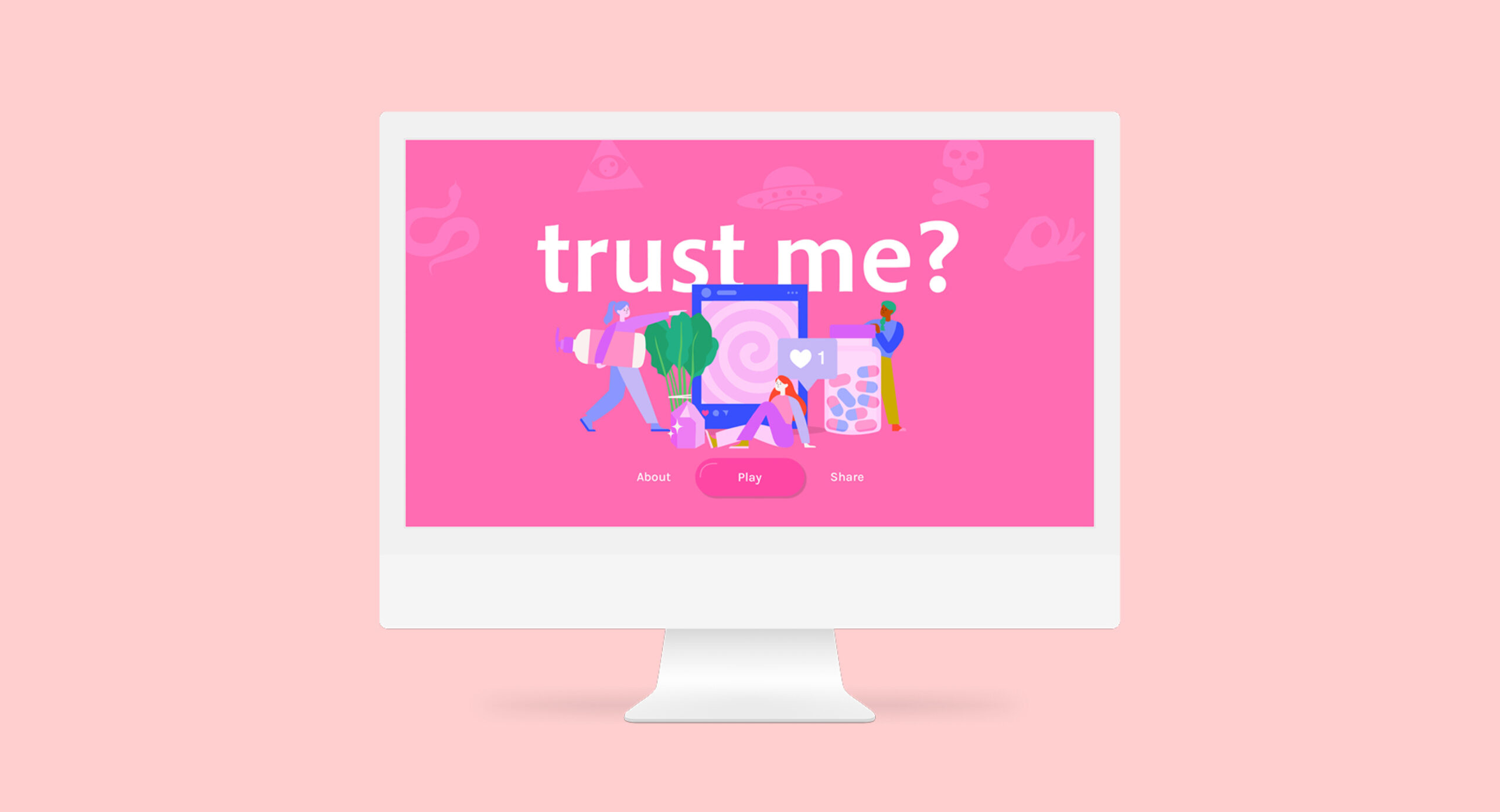
Trust Me? is a social impact game developed during my Honours year.
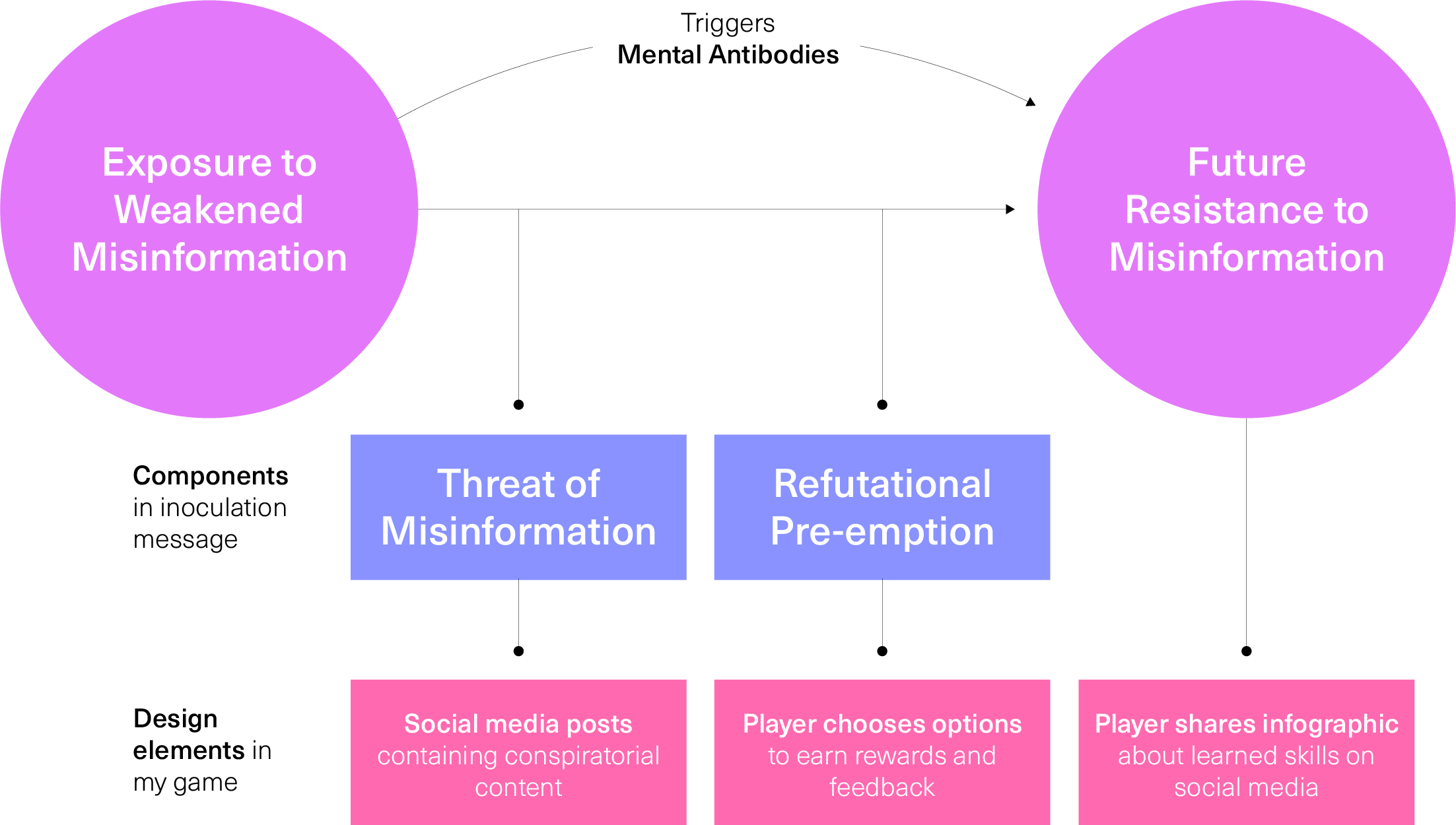
The game aims to inoculate people against the misleading techniques used to generate and spread conspiracy theories in the online wellness community. 2020 marked a rise in wellness influencers using feminine-coded aesthetics to spread COVID-19-related conspiracy theories to their young female audiences on Instagram.
This phenomenon was dubbed ‘Pastel QAnon’. The game leverages UX principles to equip players with the critical thinking skills needed to protect themselves against misinformation.
Trust Me?
Approach.
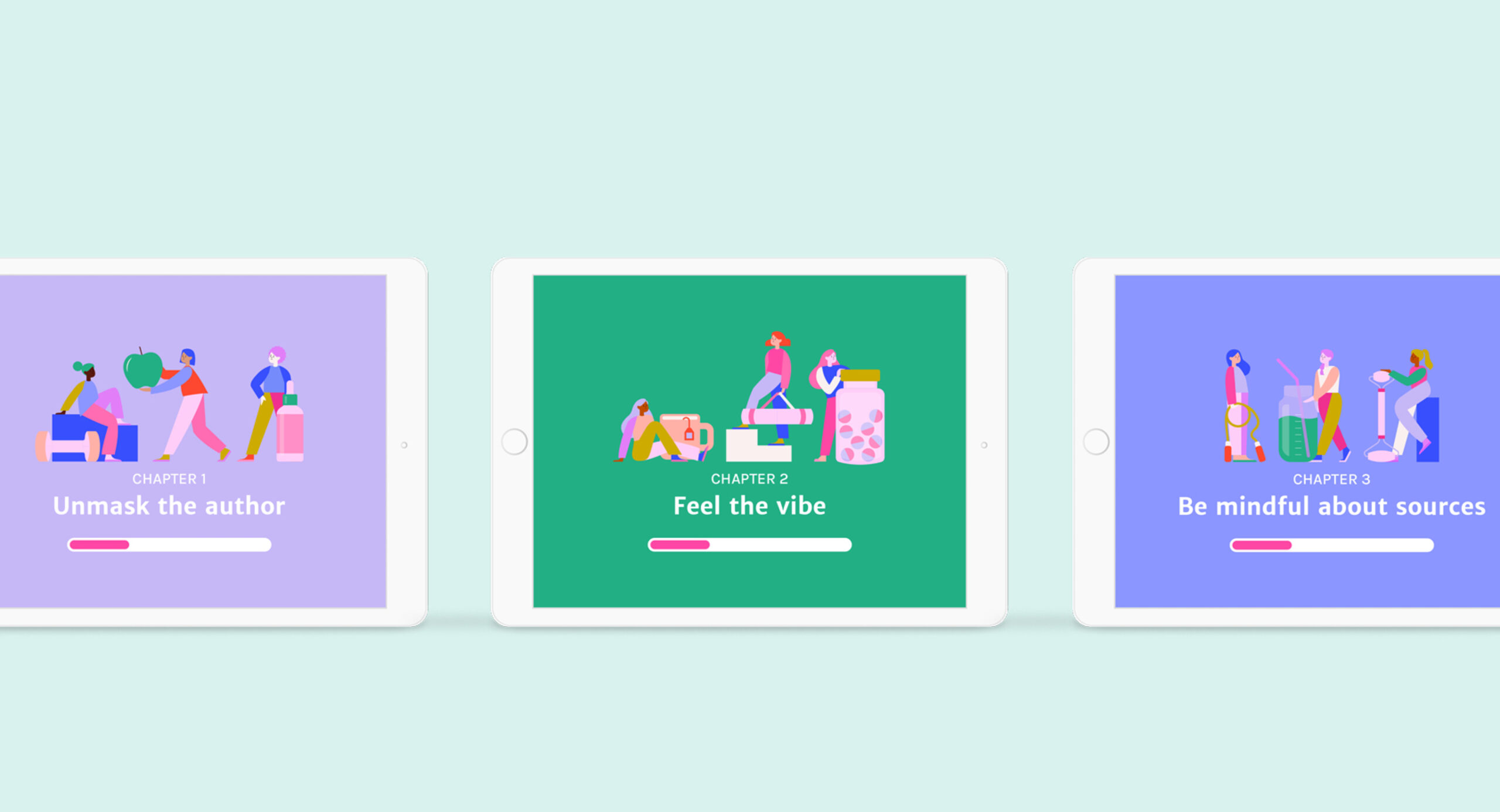
I used Adobe Illustrator and Photoshop to design the graphic components of the game. The characters have non-representational skin tones and lengthened limbs to achieve universal appeal and trust among users. The vibrant pastel colours reference the palette employed in the Pastel QAnon posts.
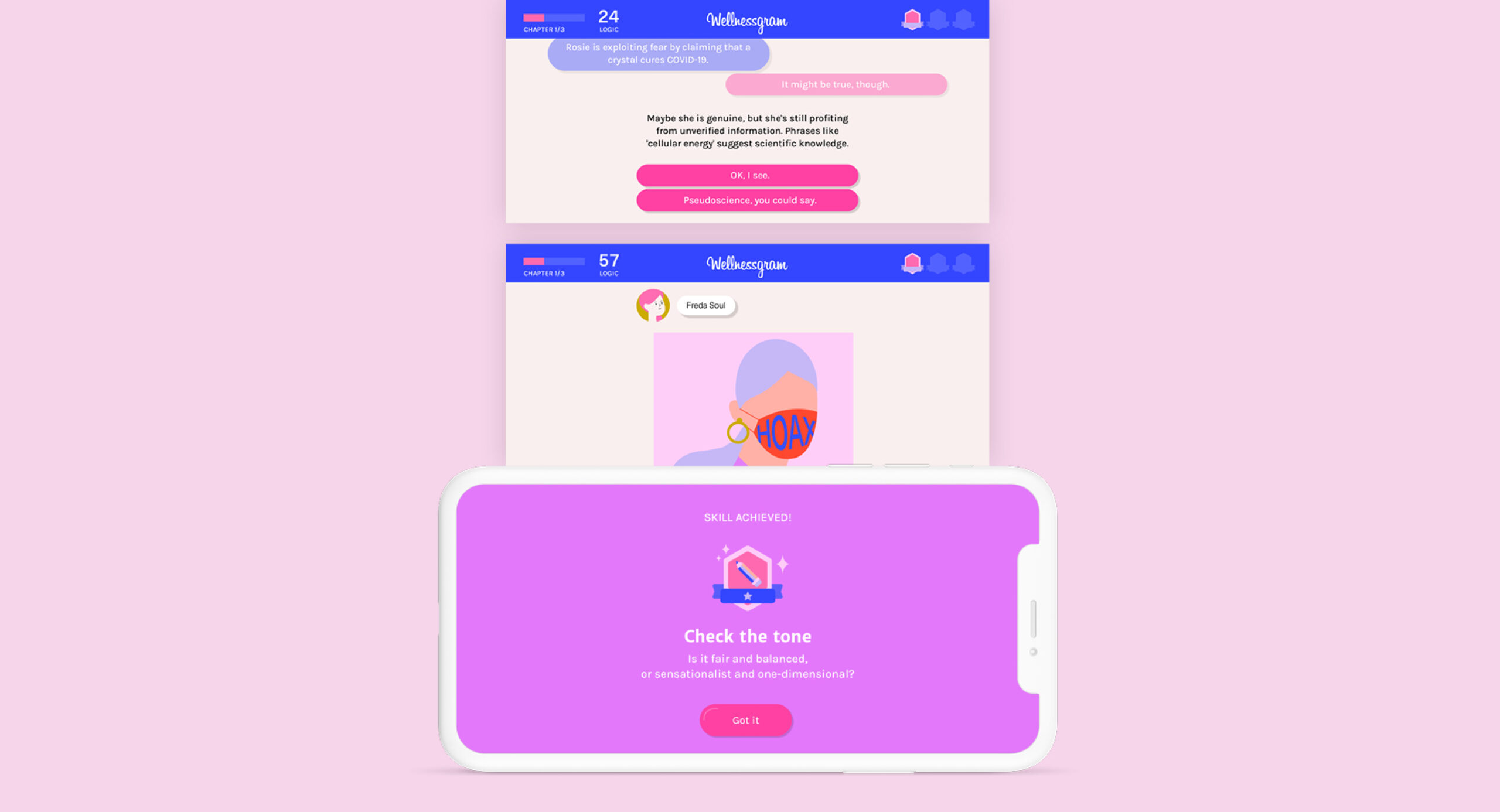
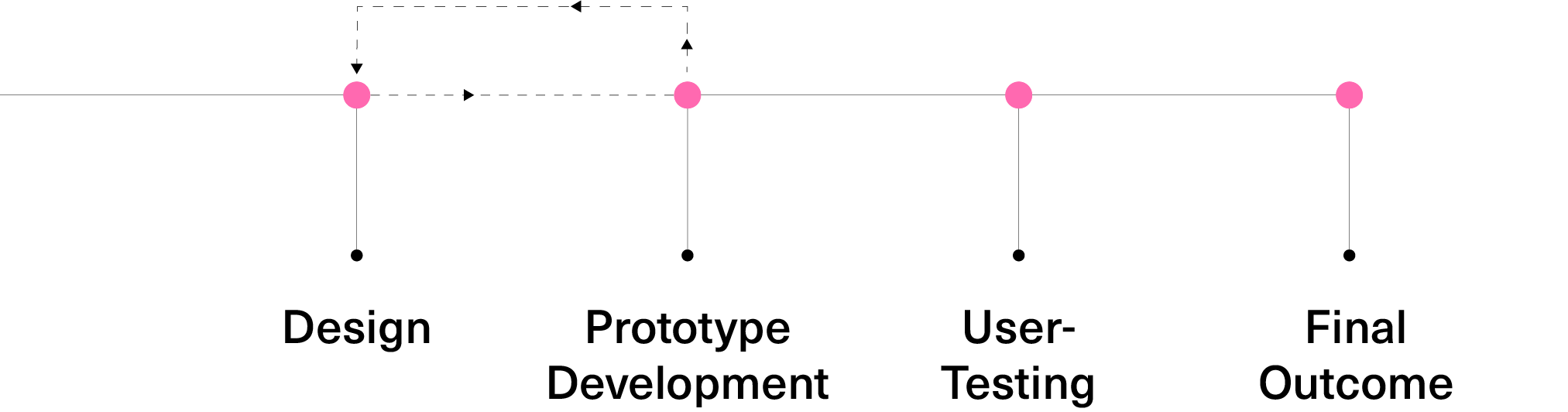
The main screen is a fictional social media feed called Wellnessgram, which parodies the name and logo of Instagram. I used Adobe XD to create a wireframe that mapped the user’s navigation through the game, and created a dialogue tree in Excel to compile the in-game text, which helped me to write the narrative.
Trust Me?
Conclusion.
After designing the graphics for the game I collaborated with a game developer to make Trust Me? playable in a web browser. The game was developed using the HTML, CSS and Javascript web languages.
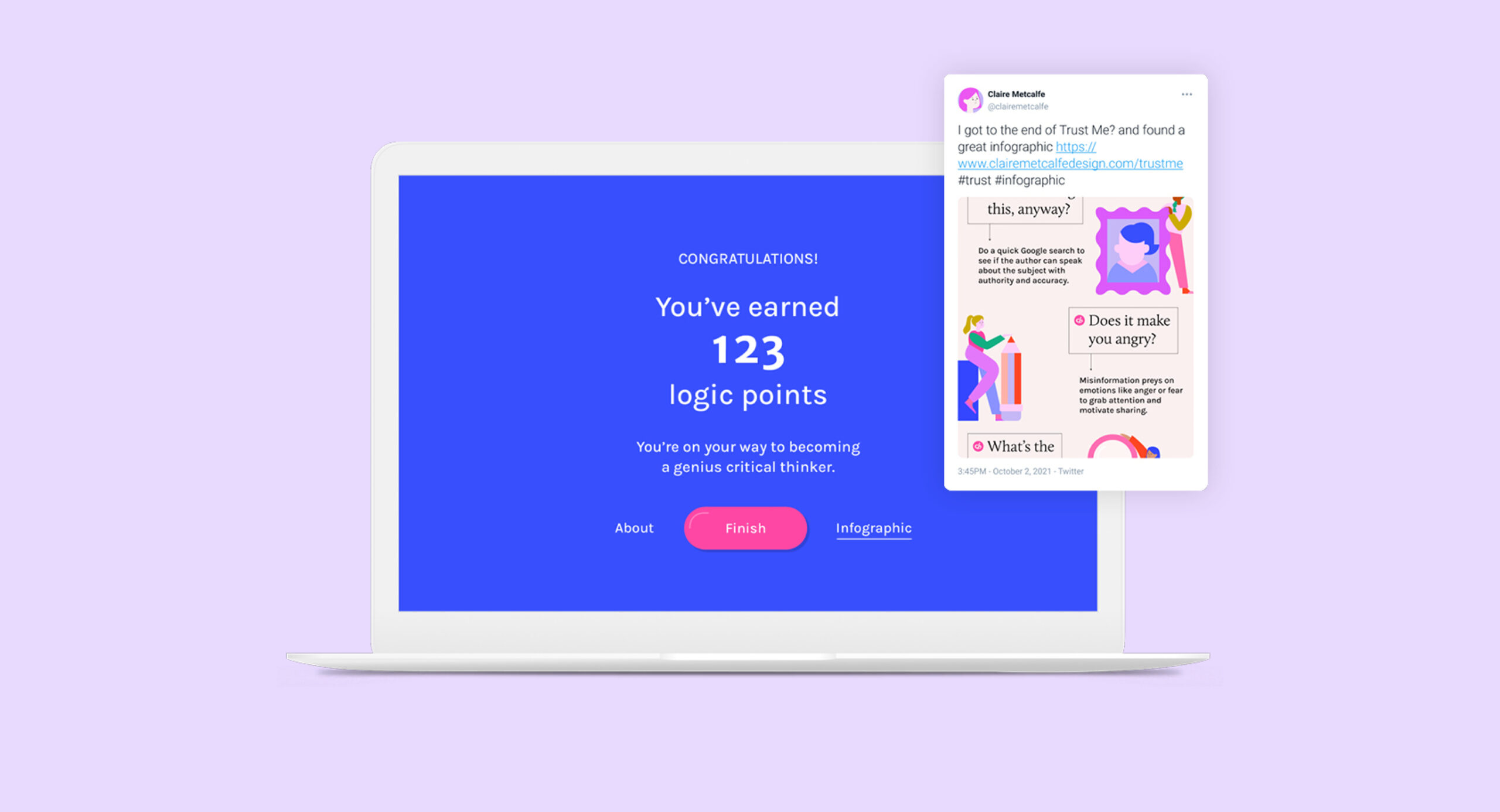
User-testing revealed that the most motivating factor of the game was the conversation format, suggesting that narrative-led games are effective in adult learning outside the classroom. My research suggests that online games are a scalable and inexpensive means to improve rates of misinformation detection and reach mass audiences.